With active participation, the Regional Observatory for Social Inclusion of the Region of Crete was present at the highly successful two-day event organized by the Municipality of Heraklion, on November 19 and 20, focusing on the Expanded Community Center and the role of social structures in strengthening social inclusion and community development.
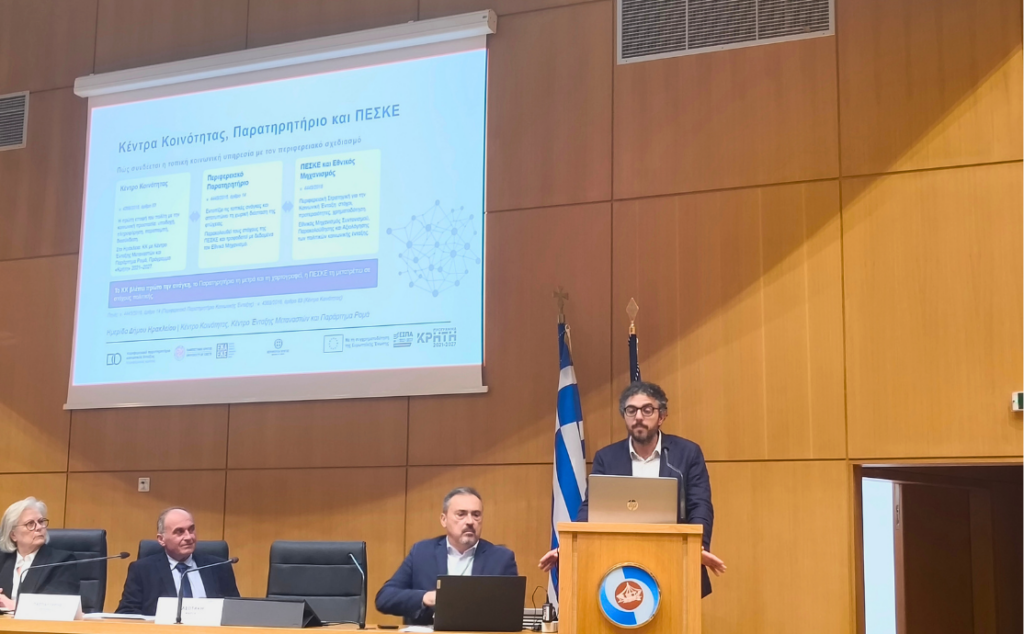
On Thursday, November 19, at the conference entitled “From Social Support to Community Development with a Horizon of 2030”, held at the Heraklion Chamber of Commerce, the Observatory was represented by Angelos Loukakis, its Scientific Associate and Adjunct Lecturer at the Department of Sociology of the University of Crete. Mr. Loukakis presented the presentation entitled “Issues of social inclusion and social cohesion in the Region of Crete: Spatial dimensions and the contribution of Community Centers”, focusing on the spatial dimensions of social inclusion and the role of Community Centers in supporting local communities.
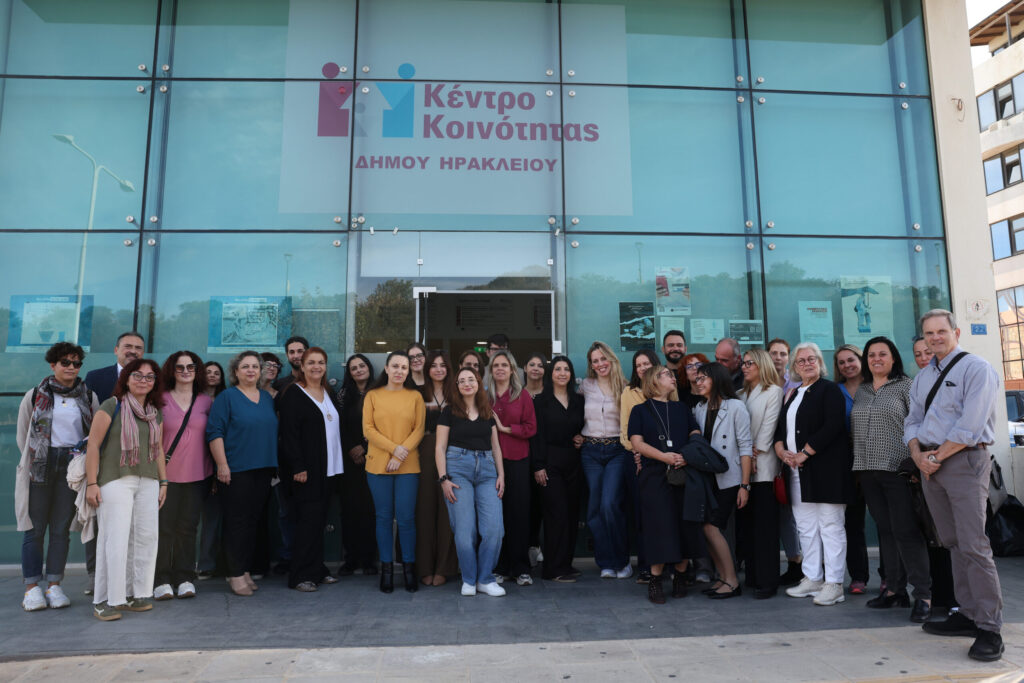
On Friday, November 20, the Observatory’s participation continued with the presence of its executive, Matina Lefkochier, in the organized visits to the Central Structure of the Community Center of the Municipality of Heraklion, the Immigrant Integration Center, the K.D.A.P. Disabled Persons, the Social Pharmacy, the KIFI of Alikarnassos and the Roma Branch.
Of particular importance was the fact that the visits were carried out during the full operation of the structures, as the participants were given the opportunity to get to know firsthand the way they are organized and operated, the services provided and the procedures for serving the beneficiaries. At the same time, a substantial discussion and exchange of views took place on the daily challenges faced by the services, while issues related to, among others, the recording, collection and use of data were raised.
The Observatory’s participation in the two-day event highlighted the importance of direct contact with the social services and the people who staff them, as well as the exchange of knowledge and experience between the bodies. The connection of scientific documentation with the daily operation of social structures is an important prerequisite for the mapping of social needs and the support for the design of effective social inclusion policies in the Region of Crete.